BLOG 4

DEVELOPMENT AS A FUTURE LEADER

Some people are known to be born leaders. The quality runs in their family; it is in their genes. Others are inspired by such people and work upon embedding this quality. Some fail at achieving it others are successful in attaining it through continual efforts.
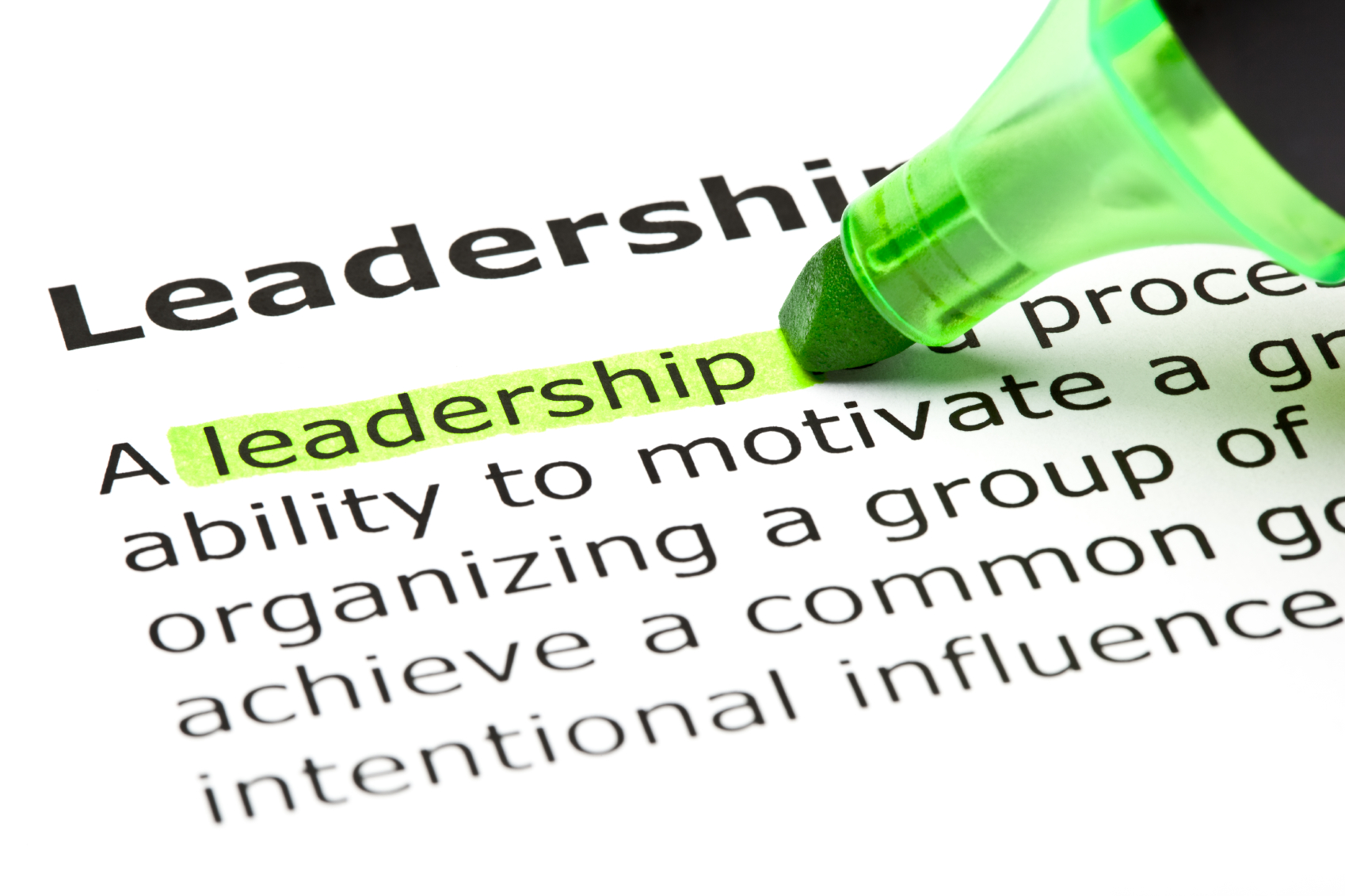
The word ‘Leadereship’ highlighted in green with felt tip pen

Leaders exist in all aspects of life and society. They are present in humanity’s oldest stories, like Homer’s Iliad, in The Bible and Beowulf.

One quality all leaders more than likely have is an ability to communicate. In all of history, from Jesus Christ to Henry Ford, Hitler to any great politician, such as Franklin D. Roosevelt, there doesn’t seem to be too many leaders who were poor communicators. Leaders generally have the gift of gab, the ability to master their language and convey thoughts, ideals and motivation to the people they lead.

Another quality in leaders is selflessness. Like the hero in many stories and tales of antiquity, a leader is a person who often puts aside their own worries, concerns and insecurities in order to focus on the people they are leading. Writer Joseph Campbell describes a hero as someone who has given his or her life to something bigger than oneself.

Other qualities that leaders possess can run the gamut. Today, a leader most likely has honesty. If they were dishonest, those being led would not trust the leader – and will therefore not go along with their mission and listen to them. Leaders also are busy people, so they must be adept in their ability to delegate responsibilities to others without making those people feel exploited. Also, a sense of humour and commitment, a positive attitude, a sense of creativity, intuition and an ability to inspire are common qualities a leader may have.

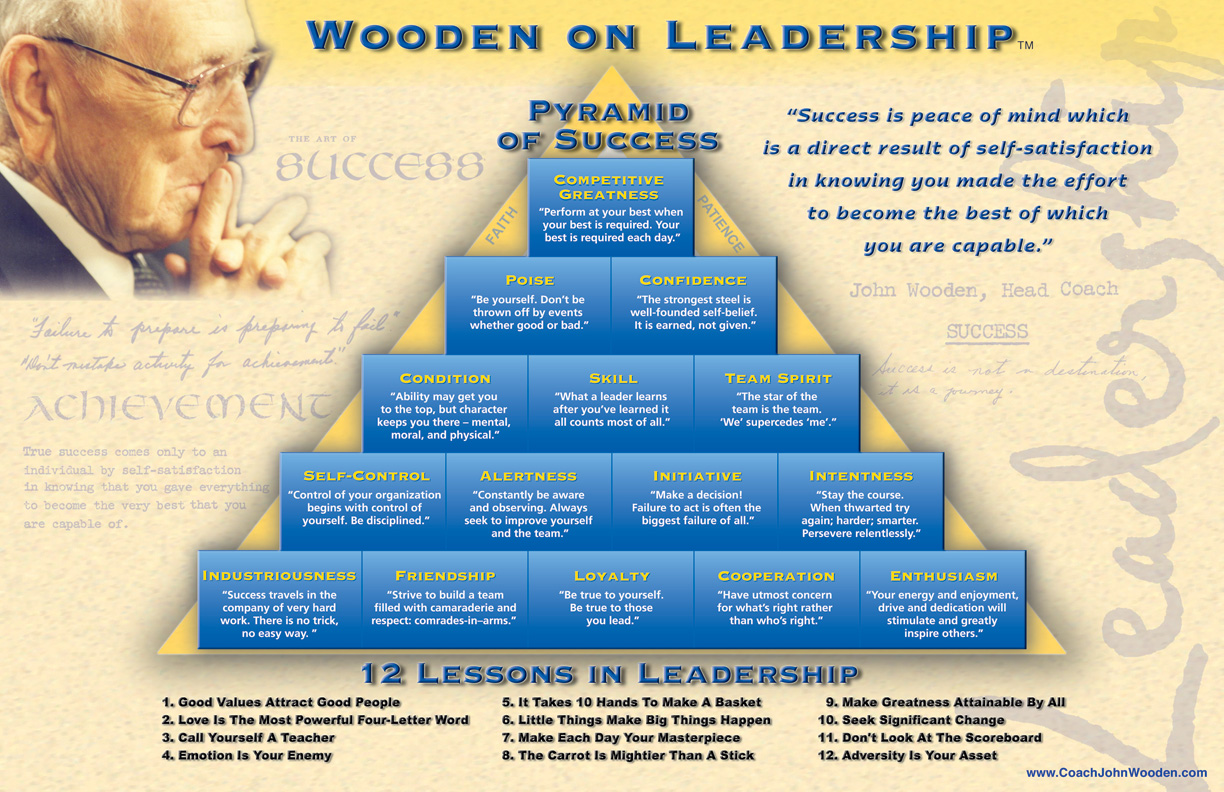
Here are a few leadership qualities I possess in order to lead others and be successful in my venture:
Customer Obsession

Leaders start with the customer and work backwards. They work vigorously to earn and keep customer trust. Although leaders pay attention to competitors, they obsess over customers.

Ownership

Leaders are owners. They think long term and don’t sacrifice long-term value for short-term results. They act on behalf of the entire company, beyond just their own team. They never say “that’s not my job”. 

Invent and Simplify

Leaders expect and require innovation and invention from their teams and always find ways to simplify. They are externally aware, look for new ideas from everywhere, and are not limited by “not invented here”. As I do new things, I accept that I may be misunderstood for long periods of time.

Learn and Be Curious

Leaders are never done learning and always seek to improve themselves. They are curious about new possibilities and act to explore them.

Hire and Develop the Best

Leaders raise the performance bar with every hire and promotion. They recognize exceptional talent, and willingly move them throughout the organization. Leaders develop leaders and take seriously their role in coaching others. I work on behalf of my people to invent mechanisms for development like Career Choice.

Insist on the Highest Standards

Leaders have relentlessly high standards – many people may think these standards are unreasonably high. Leaders are continually raising the bar and drive their teams to deliver high quality products, services and processes. Leaders ensure that defects do not get sent down the line and that problems are fixed so they stay fixed.

Think Big

Thinking small is a self-fulfilling prophecy. Leaders create and communicate a bold direction that inspires results. They think differently and look around corners for ways to serve customers.

Bias for Action

Speed matters in business. Many decisions and actions are reversible and do not need extensive study. I value calculated risk taking. 

Earn Trust

Leaders listen attentively, speak candidly, and treat others respectfully. They are vocally self-critical, even when doing so is awkward or embarrassing. Leaders do not believe their or their team’s body odour smells of perfume. They benchmark themselves and their teams against the best.

Have Backbone; Disagree and Commit

Leaders are obligated to respectfully challenge decisions when they disagree, even when doing so is uncomfortable or exhausting. Leaders have conviction and are tenacious. They do not compromise for the sake of social cohesion. Once a decision is determined, they commit wholly.

Deliver Results

Leaders focus on the key inputs for their business and deliver them with the right quality and in a timely fashion. Despite setbacks, they rise to the occasion and never settle.

Honesty

Honesty is one of the main qualities of a leader. A leader leads by example. So, if you want your team to look up to you, have faith in your ideologies and follow fair means in the tasks you assign them, it is imperative for you to be honest yourself. A deceitful person may attract people by way of manipulation; however, he will soon lose his credibility.

Communication

A leader does not think of himself as superior to you and thus does not believe in maintaining a distance. He rather ensures a flow of two-way communication to share ideas, discuss issues and maintain a cordial relation.

Self-Confidence

The level of self-confidence leaders possess is impeccable. They are sure about themselves and know exactly how to put their point across to inspire their audience.

Transparency

Good leaders do not hide facts or plays games. They maintain transparency while dealing in both personal and professional relationships.

Patience

A person who is impatient loses temper frequently and can never qualify to be a good leader. Possessing patience is one of the main keys to becoming a good leader.

FEEDBACK 1-My teammate told me to improve my communication skills.

FEEDBACK 2-My teammate suggest me to improve my skills on the public speaking

FEEDBACK 3-My teammate helps me to improve in academic writing skills.

Conclusion

A good leader has the ability to inspire others and instil leadership qualities in her subordinates to generate future leaders. And I posses all the leadership qualities which would help me become a great lead in the organisation which will be ultimately resulting in better growth and success of the organisation by using my skills, abilities and qualities.
REFERENCES

Apple, 2019. Available at https://www.apple.com/in/

Molchanov, M.A., 2016. The Ashgate research companion to political leadership. Routledge.

Rosenbach, W.E., 2018. Contemporary issues in leadership. Routledge.
BLOG 3

Change Management

 Introduction

Change management takes place at a period when a company is started to change its values, its focus or objectives. It is the period of metamorphosis where the organisation is at a critical phase. This is why change management is so important. This phase is so critical because it paves the way of the company that they are going to take for the next few years. Change management is the planning and the strategies enforced where each and every layer is defined properly in an organisation. It brings about a revamped feel to the company which helps in attracting clients.

Steps to Change Management

The first step to change management comes with the question that is a change really necessary? If a change is what an organisation needs, then the leaders need to create that urge within the whole group (Hayes, J., 2018). The second step that comes after getting the acknowledgment of most of the workforce is to choosing the team who is going to spearhead the whole thing. The third step is to have an idea of how the change is going to be. The entire vision should be clear to each and every member of the organisation who has a connection directly. This is the fourth step, the distribution of the vision. Change management is not that easy and getting the vote of change from every employee is not possible because there will always be a small percentage who will be against the change and sometimes some technical issues might also be there. The leaders should be able to remove these obstacles to build the willpower of the team. The next step would be complete short-term objectives. After completion, the satisfaction will bring about great motivation within employees and the morale will start to build up. These wins are really good for the smooth operation of a company in this phase. There will be many failures during this change. But the thing to remember at that moment is to stick to the plan. After 100% execution of the plan, it should be given some time to affect in the way as the leaders have planned. Before declaring that the change has been done, let the change take some time to fit into people’s lives (Doppelt, 2017). This was the seventh step. The eight step is to keep monitoring how the change is affecting people’s lives and continuously evolve accordingly. Keeping the change updated and

 Examples of Change Management

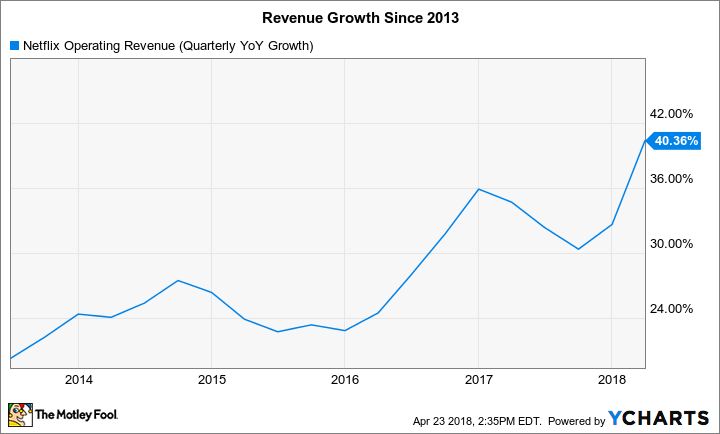
Netflix started its business at 1997 where it used to offer monthly subscription to customers with which they could rent movie DVDs. The movies would be delivered to their homes directly. But Netflix couldn’t live up to what it had promised and they were starting to get unsuccessful and their business started to fall. That is when they took the decision of change management. They shifted their focus from home delivery to the digital world and at 2007, Netflix started its digital streaming. This was better than the previous because customers did not have to wait for the movies since they could log in anytime and watch the films (Netflix ,2019). This change management was such a successful decision that Netflix didn’t have to look back again and today it is the biggest global online streaming giant.

Figure: Revenue Growth of Netflix

(Source: Netflix, 2019)

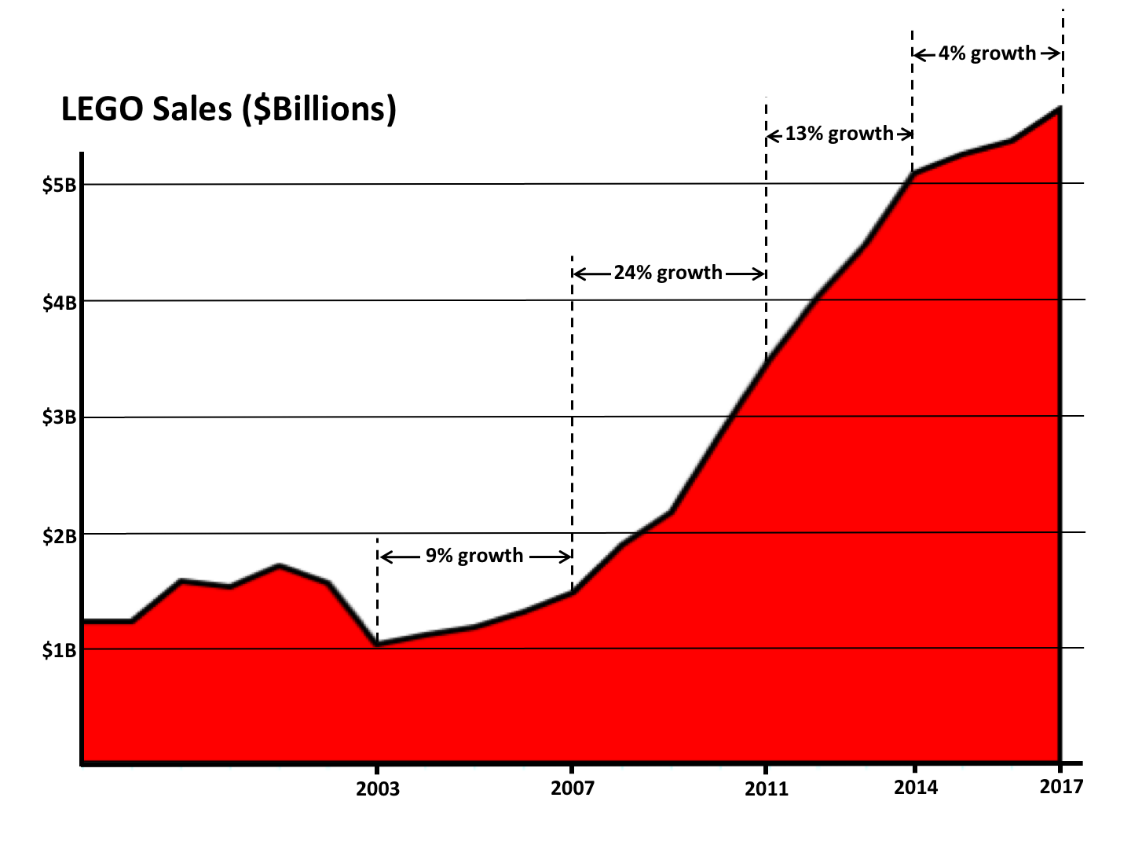
LEGO, the giant toy company which used to make the best toys ever had such a phase. After its expansion, LEGO’s stocks started to fall due to unavoidable situations. By 2004, LEGO was almost about to be bankrupted which is when they took their last attempt to survive and it was to enforce the process of change management. They quickly moved from making toys and entered the then booming digital industry. It opened to doors to new fields from where they could collect revenues (Lego, 2019). Movies, mobile applications and games at almost every platform became their focus and since then LEGO has come back from their worst phase to their lost prime.

Figure: Sales of Lego

(Source: Lego, 2019)

Conclusion

 Change Management is a very good option for a failing business or organisation. But it should only be done when its necessary. The only way it works when the change is properly planned. Without a clear focus and an even clearer objective, it is bound to fail and so it is often risky. Change management should be the last option because once it’s done, it cannot be undone. It is a second chance for an organisation which has not been able to survive due to the harsh nature of this competitive world.

References

Doppelt, B., 2017. Leading change toward sustainability: A change-management guide for business, government and civil society. Routledge.

Hayes, J., 2018. The theory and practice of change management. Palgrave.

Netflix 2019, Available at https://www.netflix.com/in/

Lego, 2019. Available at https://www.lego.com/en-us

BLOG 2

Contemporary Leadership Style: How relevant are they in today’s world?

Introduction

The world is governed by leaders, it has always been the case. Leaders are individuals who have always guided their group during tough times. They are the ones who have turned losses into profits, wrecked ships into completely new ones. Leadership is not only a concept, it’s a necessity. Every profession has leaders in it and they have helped time and time out to enthral the world showing why are they important. Leadership can be shown in many ways. It’s not important to be that you are only a leader if you are in a higher position in some business, In troubled times, any person who steps up to speak to their team or group and show them direction, give them motivation to give 100% in their efforts is a leader in definition. In this study, the different types of leadership will be discussed.

Contemporary Leadership Styles

As already mentioned, leadership has many styles in modern times. There is the traditional leadership, where it has been made to understand that all power stays with the leader. This often instils fear, negativity and hatred in employees or team members since any wrong move may lead to a huge problem career wise. What follows later is that these leaders are often oiled by employees which results them in being favourites and it also leads to politics among colleagues. The traditional leadership bring negativity with it which doesn’t help with the performance of the whole group. Different styles of leadership have been developed and they have been quite useful in situations. Traditional leadership have often been described as masculine since its inclinations towards power and pressure. Contemporary leadership has bit of both and the main difference is that it brings about a sense of togetherness which was missing earlier. In here, no doubt the power stays with the leader but the leader doesn’t instil fear or negativity but introduces motivation and a knack to give efforts to achieve results. The goals set are long term and it is much more successful in the long term. The work culture improves significantly and instead of oiling bosses the employees are much more interested in performing well to earn fruitful results (Molchanov, 2016). Contemporary Leadership brings values and the environment is driven by continuous gathering of knowledge and new born ideas out of creative minds. Traditional leadership is limited with rules and regulations which often restricts positivity whereas contemporary leadership excels in it. It doesn’t have strict regulations, only the basic ones which the employees would generally follow. Contemporary leadership breaths positivity and growth in its roots. It looks after its employees as its own which brings about the togetherness in any organisation. Its not only what the leader instils, it is also what a leader himself is. An unconventional leader has many skills that he/she has honed with experience. Good communication skills, trying to hear the problems of employees and trying to solve a few of them (Rosenbach, 2018). One of the main traits of any kind of leadership is his honesty and transparency. It is because it sets an example for the employees to follow.

The example of Apple

The leadership style could be seen as complicated as he was primarily involved in taking up challenges be confident about them. He was dynamic, charismatic and his sheer will power made him a role model among his employees (Apple, 2019). The actions of Steve Jobs helped the company to create new designs and helped build strong organisational culture. Today Apple is the most valued company in the whole world by capitalization of the market.

Figure: Sales Chart of Apple

(Source: Apple, 2019)

Discussion

This study talks about how the Contemporary Leadership has come into action in today’s world and how it is useful in dealing during troubled situations. It shows how it has been able to overcome the flaws that were previously there with traditional leadership. Contemporary leadership brings the whole group together and the chemistry between the employees grow and it can be seen that the problems in the work environment starts to seize down.

Conclusion

Contemporary leadership has proved itself that with its values it can install a strong motivating workforce wherever it has been enforced. In today’s competitive and harsh world, contemporary leaders are saviours who show trust in their group to do a little better. This automatically brings a sense of responsibility among employees to prove their leaders right.   This type of leadership holds a high place in the bright future to come.

References

Apple, 2019. Available at https://www.apple.com/in/

Molchanov, M.A., 2016. The Ashgate research companion to political leadership. Routledge.

Rosenbach, W.E., 2018. Contemporary issues in leadership. Routledge.
BLOG 1


Can cultures be managed within organization?

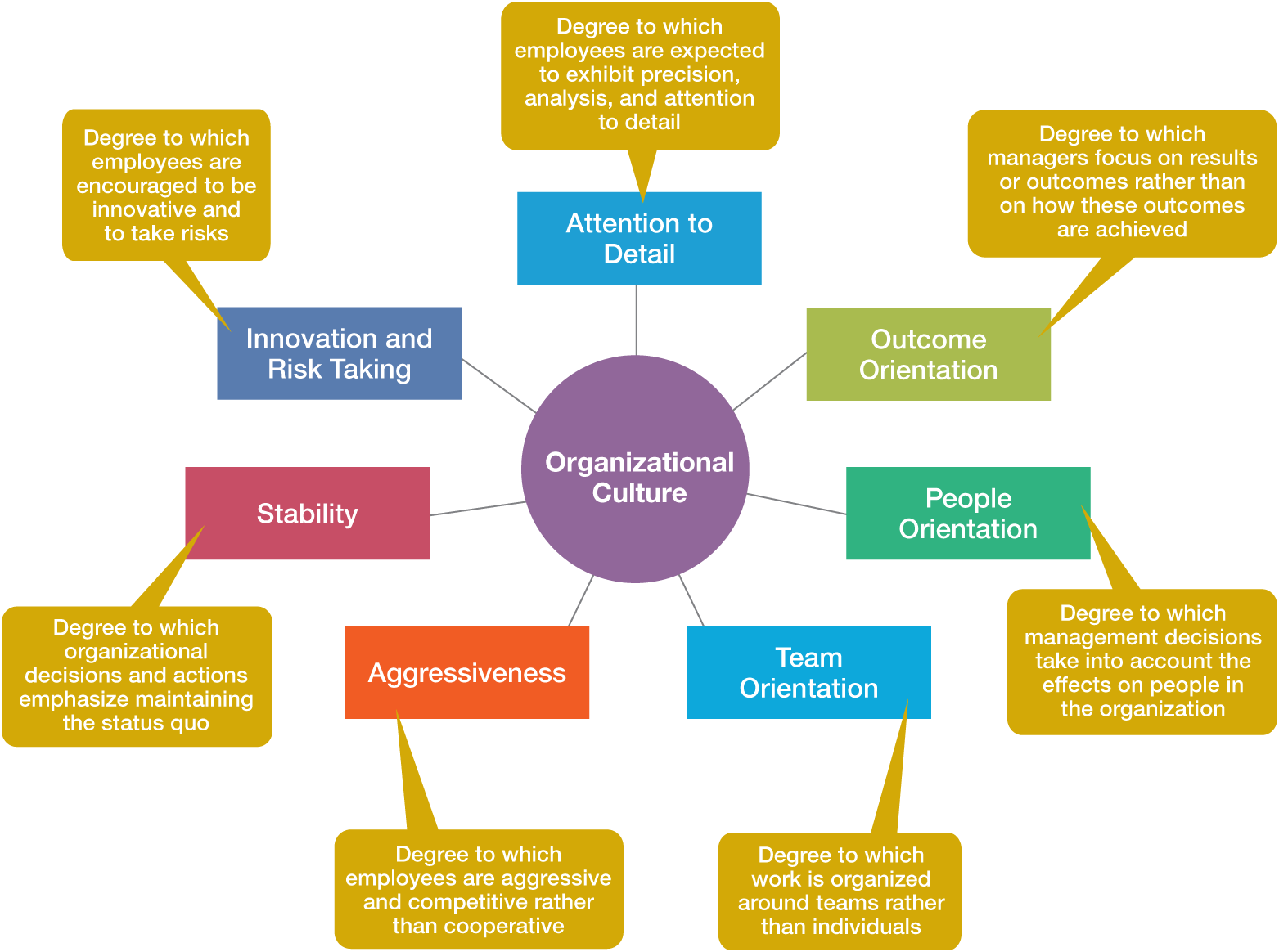
                         Figure 1: organizational structure

The Organizational culture is how things are done in an association, the unwritten tents that impact individual and gathering conduct and demeanours. Components which can impact authoritative culture include: the association’s structure, the framework and procedures by which work is completed, the conduct and mentalities of representatives. The association’s qualities and conventions, and the administration and initiative style embraced.

The way of life an association is its identity and character. Authoritative culture is comprised of shared qualities, convictions and presumptions about how individuals ought to carry on and connect, how choices ought to be made and how work exercises ought to be done. Key factors in an association’s way of life incorporate its history and condition just as the general population who lead and work for it.

A comprehension of authoritative culture is basic for compelling initiative. Pioneers and supervisors will be better set to execute procedure and accomplish their objectives if they comprehend the way of life of their association. Procedures that are conflicting with authoritative culture are probably going to meet with opposition and will be progressively troublesome or even difficult to execute.

ABOUT MARKS & SPENCER:

The M&S Company Archive is an imperative business resource of more than 70,000 chronicled things and acts to gather, protect and use material identifying with all parts of our history and advancement as an organization. One of the most extravagant retail history accusations in the nations, the Archive gathering graphs our adventures over 130 years, from Penny Bazaar to universal multichannel retailer.

M&S is one of the UK’s driving retailers. They are focused on making each minute exceptional through the high calibre, claim brand nourishment, apparel and home items they offer in their stores and universally.

CHALLENGES FACED BY M&S:

However, there are some challenges facing by MARKS & SPENCER with market dynamics.

  1. Wired world
  2. Too many shops
  3. Poor stores
  4. Fashion faux pas
  5. M&S food
  6. Peak stuffs
  7. M&S Inc.

IMPLEMENTATION STRATEGY FOR M&S TO FACE THE CHALLENGES:

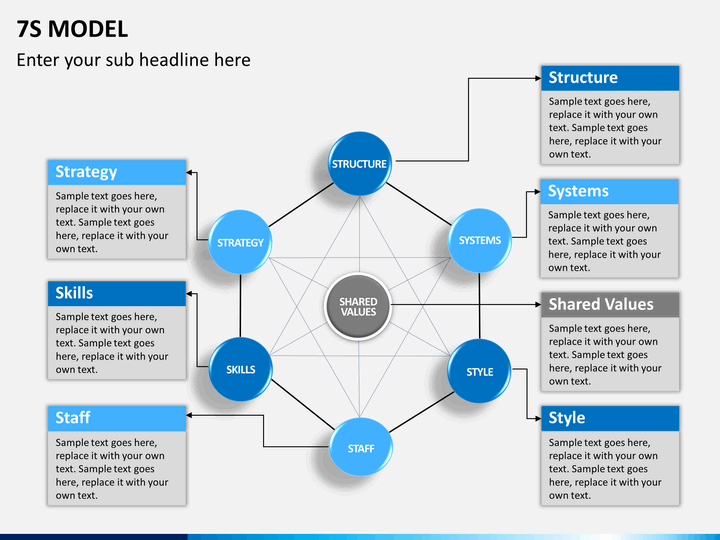
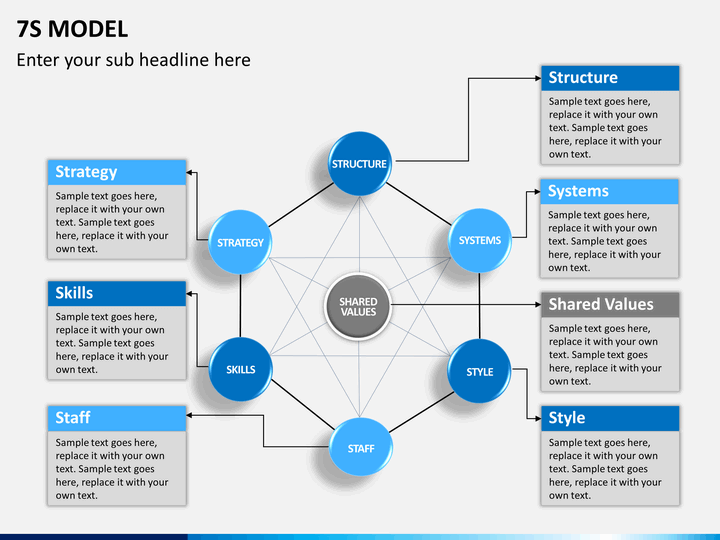
M&S can implement the McKinsey 7s Framework into their company to rectify their cultural change:

                                             Figure:4 McKinsey 7S Framework

In synopsis, the McKinsey 7Ss represent:

  • STRATEGY: The meaning of key methodologies for an association to accomplish its objectives.

+ FOR M&S- they should select various methodologies to raise their strategy issues.

  • STRUCTURE: The association of assets inside an organization into various business gatherings and groups.

+FOR M&S- according to research they can manage their campaigns.

  • SYSTEMS: Business forms and the specialized stages used to help activities.

FOR M&S- They can focus strength in key shopping missions with new lines which have a board appeal to family age customers and everyday occasions.

  • STAFF: The kind of representatives, compensation bundles and how they are pulled in and held.

+FOR M&S- There is the need for the greater focus that the new teams will no doubt be concentrating upon, probably leading with product and events over more generic activity.

  • SKILLS: Capabilities to finish distinctive exercises.

+FOR M&S- They should hire some skilled professional to handle the different departments.

  • STYLE: The way of life of the association regarding authority and connections among staff and different partners.

+FOR M&S- General merchandise still accounts for some sales and revenue.

  • SHARED VALUES: Summarized in a dream as well as mission, this is how the association characterize its purpose behind existing.

+FOR M&S- Excelling at E-commerce.

HARD ELEMENTS- Strategy, Structure, Systems

SOFT ELEMENTS- Staff, Skills, Style, Shared Values

CULTURES CAN BE MANAGED:

I conclude that organizational cultures come at the main part of the organization and they can manage effectively by focusing on the leadership management, that leaders can focus on right strategies and understanding barriers of the organisation.

As new CEO Steve Rowe he just unveiled his strategy two months back to make Britain fall back in love with M&S. The poor performance of firms clothing has been come in trouble to follow the tasks and performances.

 ROWE’S to do LIST to back in industry:

  • GETTING BACK IN FASHION
  • EXCELLING AT ECOMMERCE
  • SORTING OUT ITS STORES
  • KEEPING CUSTOMERS HUNGRY FOR MORE
  • WINNING BRITAIN’S HEARTS AND MINDS.

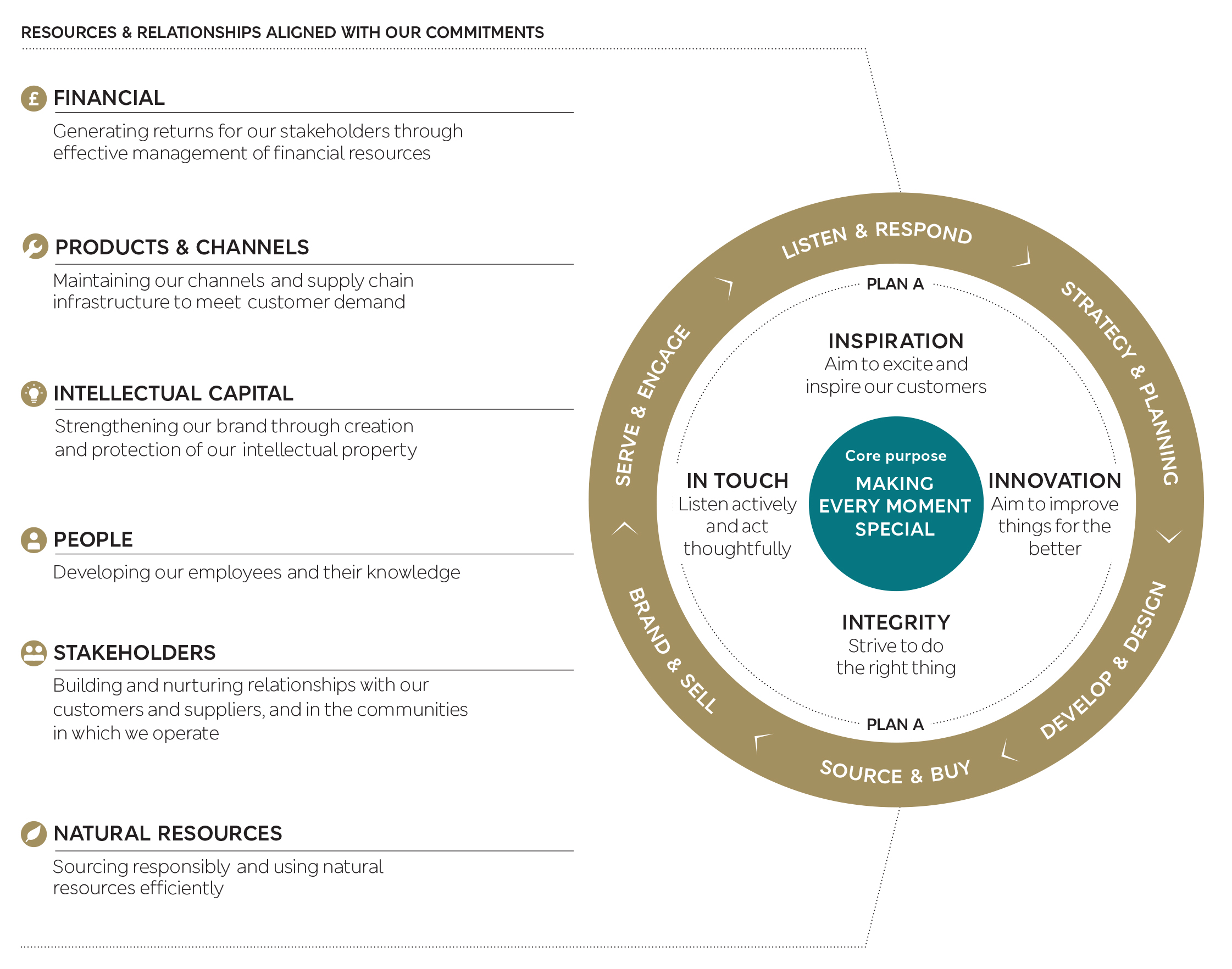
                                    Figure:5 M&S

CONCLUSION:

M&S has Plan A governance structure that ensures effective oversight and decision-making strategy, performance, responsibility and accountability:

=M&S plc Board and Operating Committee

=Plan A Committee

=Sustainable Retail Advisory Board